
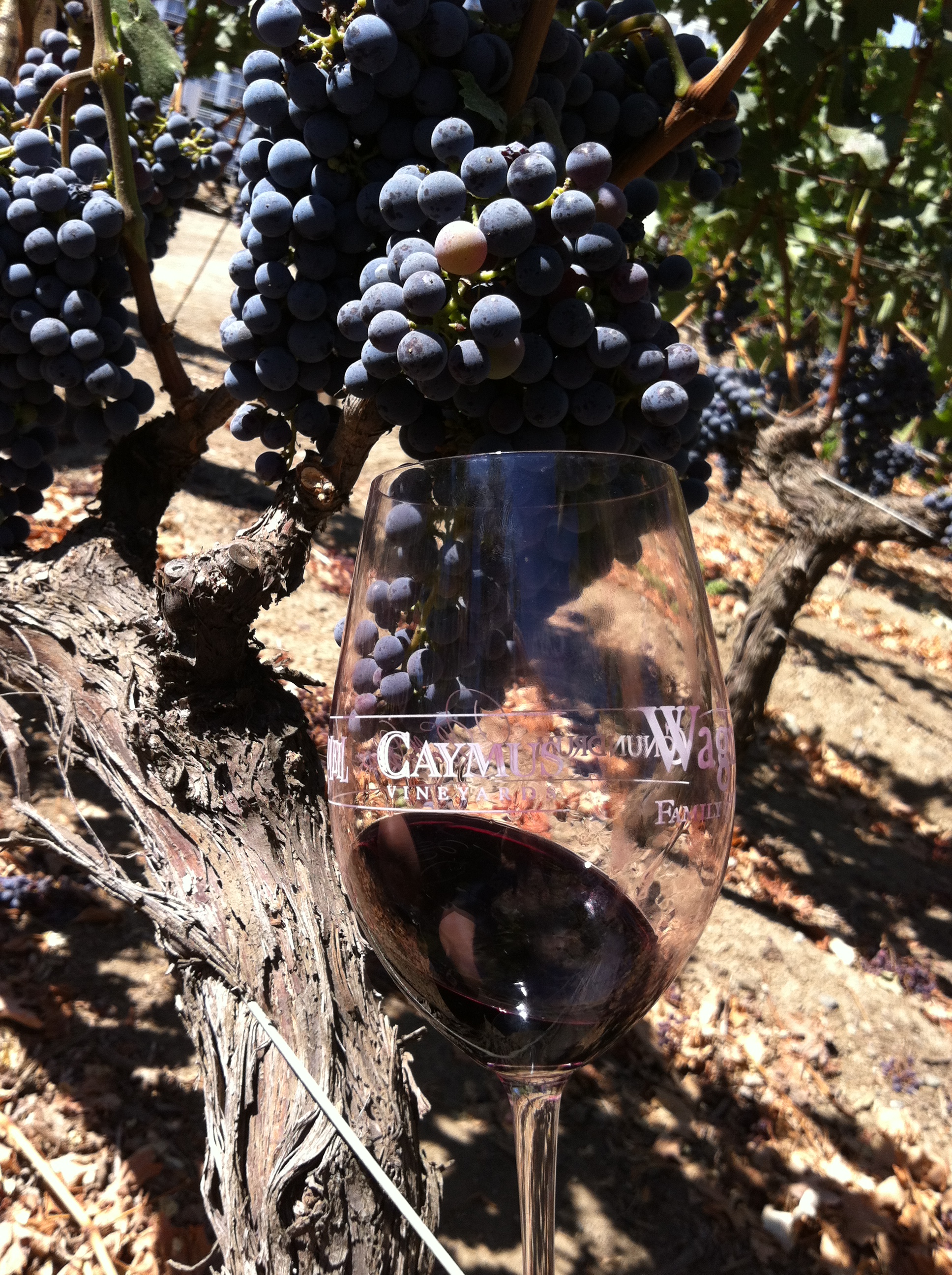
Napa Valley Cabernet - on the vine and in the glass :-)
One of the the goals Onneca Guelbenzu and I had set ourselves was to learn a little more about the iconic Napa cabs. Cabernet Sauvignon was among the first grape varieties which was planted in Napa at the end of the 19th century and it has steadily won in popularity to be the widest planted variety in Napa today. After the 1976 Judegement of Paris, when the 1973 Stags Leap Wine Cellars Cabernet took first place above 4 prestigious Bordeaux Premier Cru and Deuxieme cru’s, it became widely accepted that the Napa terroir and soil structure was particularly well suited to Cabernet Sauvignon. However – how would one define the Napa Valley terroir as there are believed to be at least 100 soil types in the Napa Valley…
Like most of the Northern Californian coast line, the Napa Valley is the result of continental drifts and plate tectonics – the valley itself is a former sea bed, now covered with sedimentary soils, which runs about 50 km north to south, wedged in between 2 mountain ranges: the Mayacamas Mountains in the west and the Vaca Mountain range in the east. Both mountain ranges are the result of volcanic activity and lava has also spilled into the valley – especially on the slopes. Besides its geological complexity the valley is also climatically diverse: temperatures can drop or rise significantly as one moves about the valley. This is why the valley is divided in 16 (sub) AVA’s, and in 15 of them Cabernet is King. The exception is Carneros, located in the most southern part of the valley, where it is too cool for Cabernet to flourish.
With so much Cabernet around and so little time where were we to start in our quest for iconic Napa Cab? In the end we decided on 3 producers who were all distributed worldwide, whose wines are a true expression of their specific terroir and who besides rising to cult status have none the less have stayed semi boutique Napa operations. And an added plus for me is that all 3 have been experiencing with sustainable and organic farming!
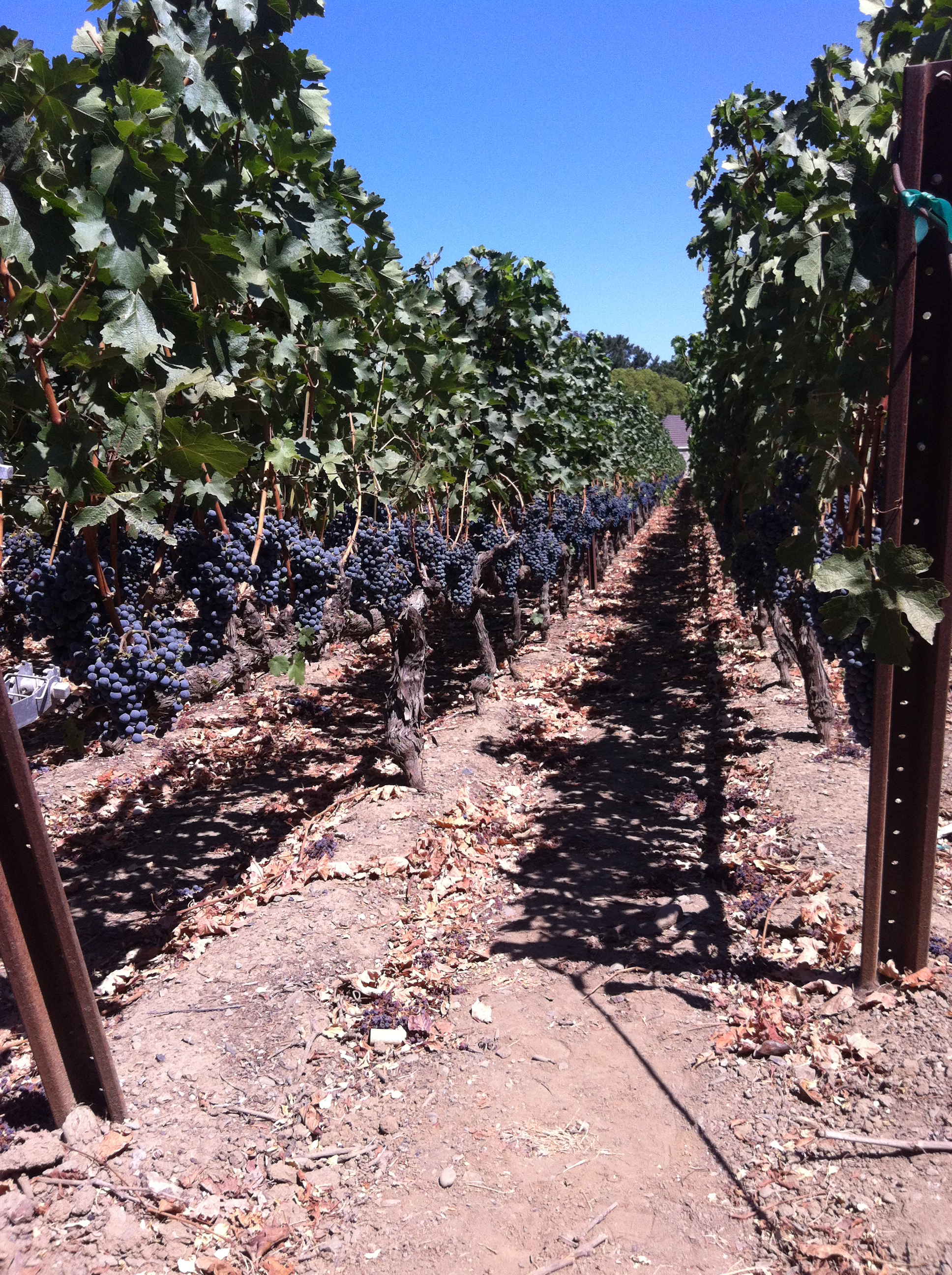
Caymus home block Cabernet vineyard in Rutherford
Caymus Vineyards was established in 1971 when Charlie and Lorna Belle Wagner convinced their 19 year old son Chuck to start a winery in Rutherford. The Wagner family had been farming grapes in Napa since 1906, but only in 1972 did they make their first wine – 240 cases of Rutherford Cabernet Sauvignon. The Wagner family picked the name Caymus from Rancho Caymus, the Mexican land grant which was given to George Yount which allowed him to settle in the Napa Valley. The land encompassed by the Rancho Caymus included Rutherford, where the Wagner homestead and their Napa vineyards are located.
The Rutherford AVA encompasses about 6 square miles, located in the widest part of the Napa Valley where it has a longer sun exposure then the rest of the valley. As everywhere in the valley the nights are cool, and the diurnal temperature differences allows the fruit to ripen at a steady pace. The soils are dominated by the Franciscan marine sedimentary materials with some volcanic deposits (primarily Bale, Pleasanton and Yolo loams).Vineyards are planted on deep and well-drained fans – which are are formed from shattered, well-bedded sandstone with a high gravel content – and very well suited to Cabernet Sauvignon.
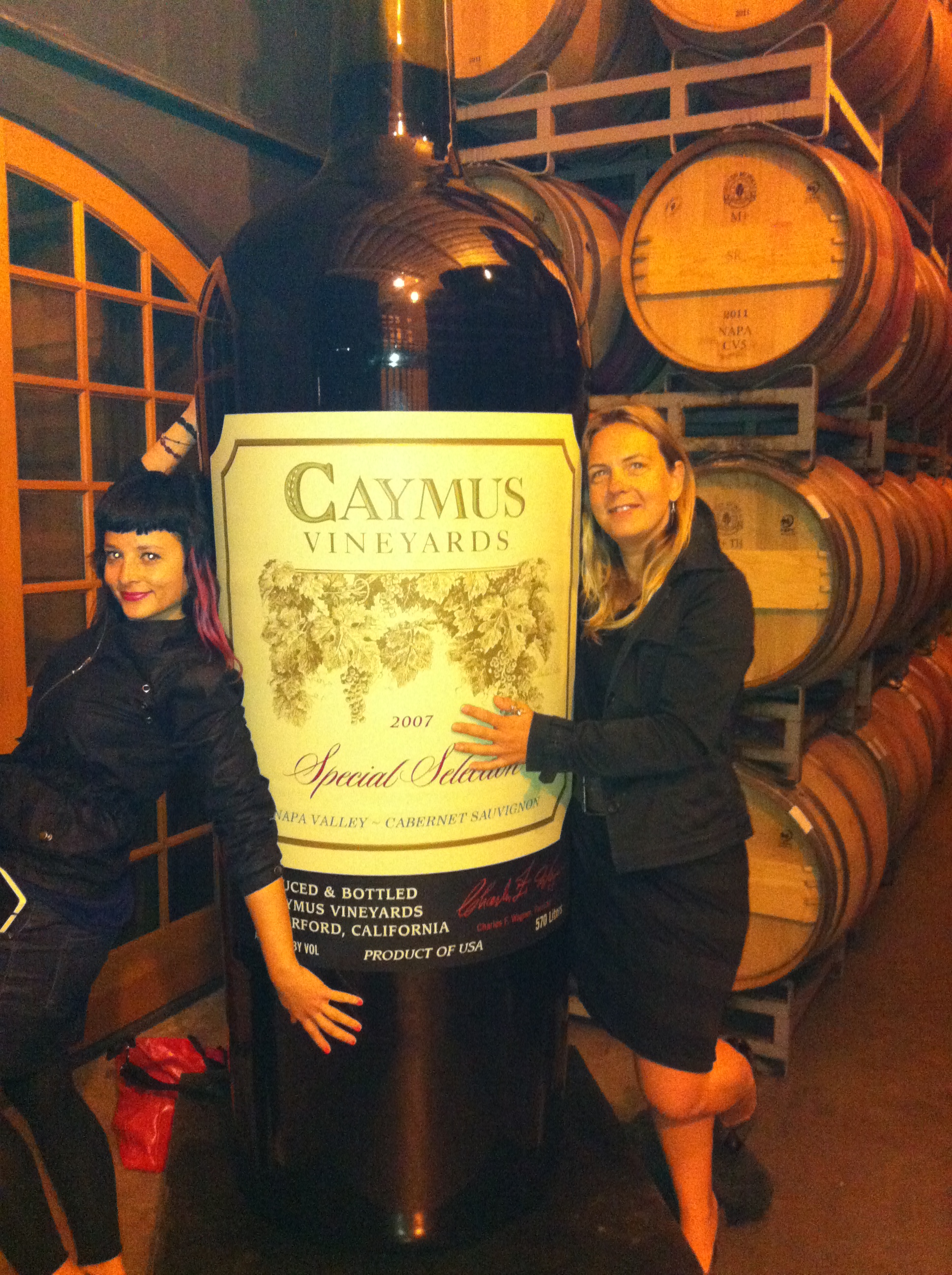
Onne & I are all wrapped up with the Caymus Special Selection Cabernet Sauvignon :-)
We tried both Cabernets and I was amazed by the difference in flavor and style. The 2010 Caymus Vineyard Napa Valley Cabernet Sauvignon was quite fresh on the nose with lots of eucalyptus notes. On the palate, besides the layers of blue and black fruit again there was this fresh kitchen herb (thyme, rosemary and even mint) characteristic. The 2009 Caymus Vineyard Special Selection was richer and also a little more complex. I was impressed with the velvet characteristic of the tannins and how drinkable this wine was right now, after just being released. Again there were layers of blue and black berries, a hint of roasted fennel and some cocoa and coffee notes in the back palate.
We were told that Caymus prides itself on producing wines that are as approachable in youth as well at maturity and both Cabernets certainly proved this statement

Welcome to Shafer!
John Shafer moved his family from Illinois to California in 1972 when bought a property of 210 acres (just under 85 hectare) in Stags Leaps. The property had an existing 30 acre vineyard of Zinfandel but as John had his heart set on Cabernet Sauvignon he created small hillside vineyard blocks where he planted Cabernet.
The Stags Leap District was the first appellation to be designated an AVA based on the unique terroir characteristics of its soil. The district is located in the eastern part of the Napa Valley and is barely a mile wide and three miles long. The two main soil types are the old river sediments of loams with a clay-like substructure in the lowlands and volcanic soil deposits left over from erosion of the Vaca Mountains on the eastern elevations. Both types are rich in coarse gravely soils resulting in low-vigor Cabernet Sauvignon vines that yield fruit of great intensity and flavor.
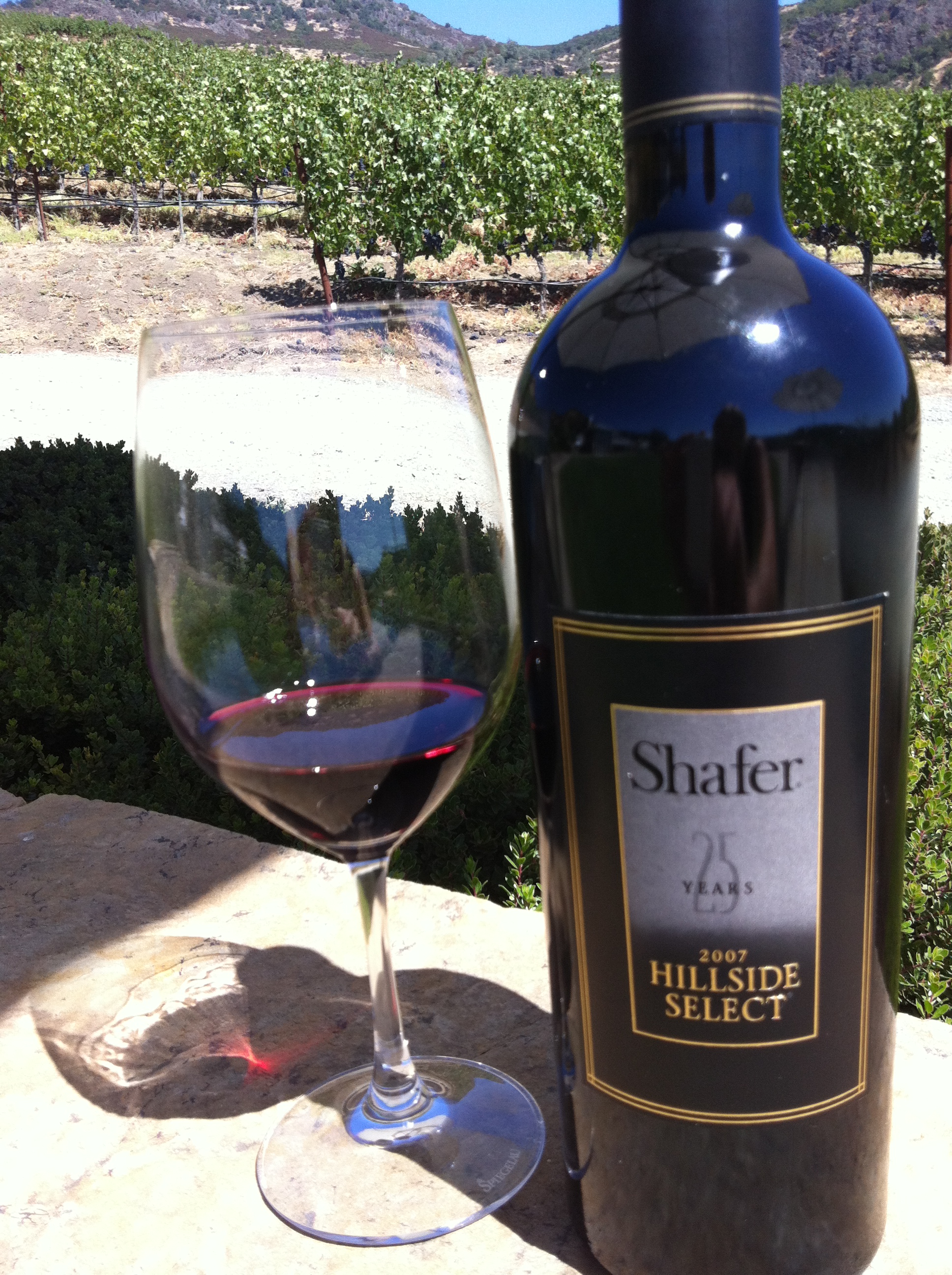
Shafer 2007 Hillside Select Cabernet Sauvignon
In 1983, Doug convinced his father to produce the Hillside Select Cabernet Sauvignon – produced from the best block on the original Hillside vineyard. It is this wine which has made the Shafer reputation as an iconic Cabernet producer. We tasted the 2007 25 years Hillside Select Cabernet, a wine just about purple in colour, with an elegant nose (floral notes, bright red fruit and eucalyptus) and a complex palate. The wine was fresh and full of flavour, with almost silky tannins – I loved how the layers of black fruit (cherry, dark juicy plum, blackberry and mulberry) were interwoven with herbaceous notes. To me this wine showed great potential and whilst it was pretty delicious when we tasted it I think the best is yet to come if we allow it a few more years of cellaring.
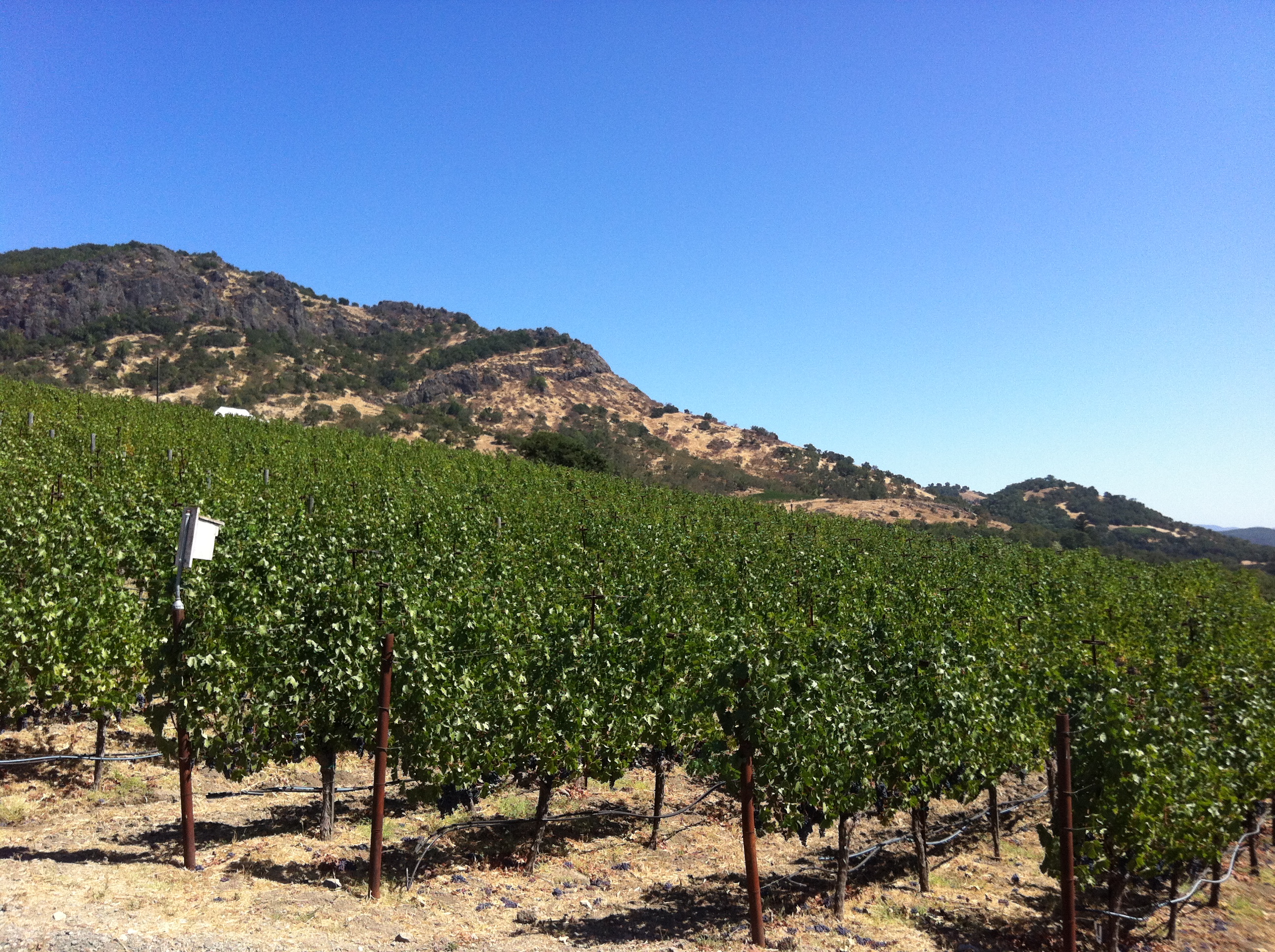
Shafer Hillside Vineyard
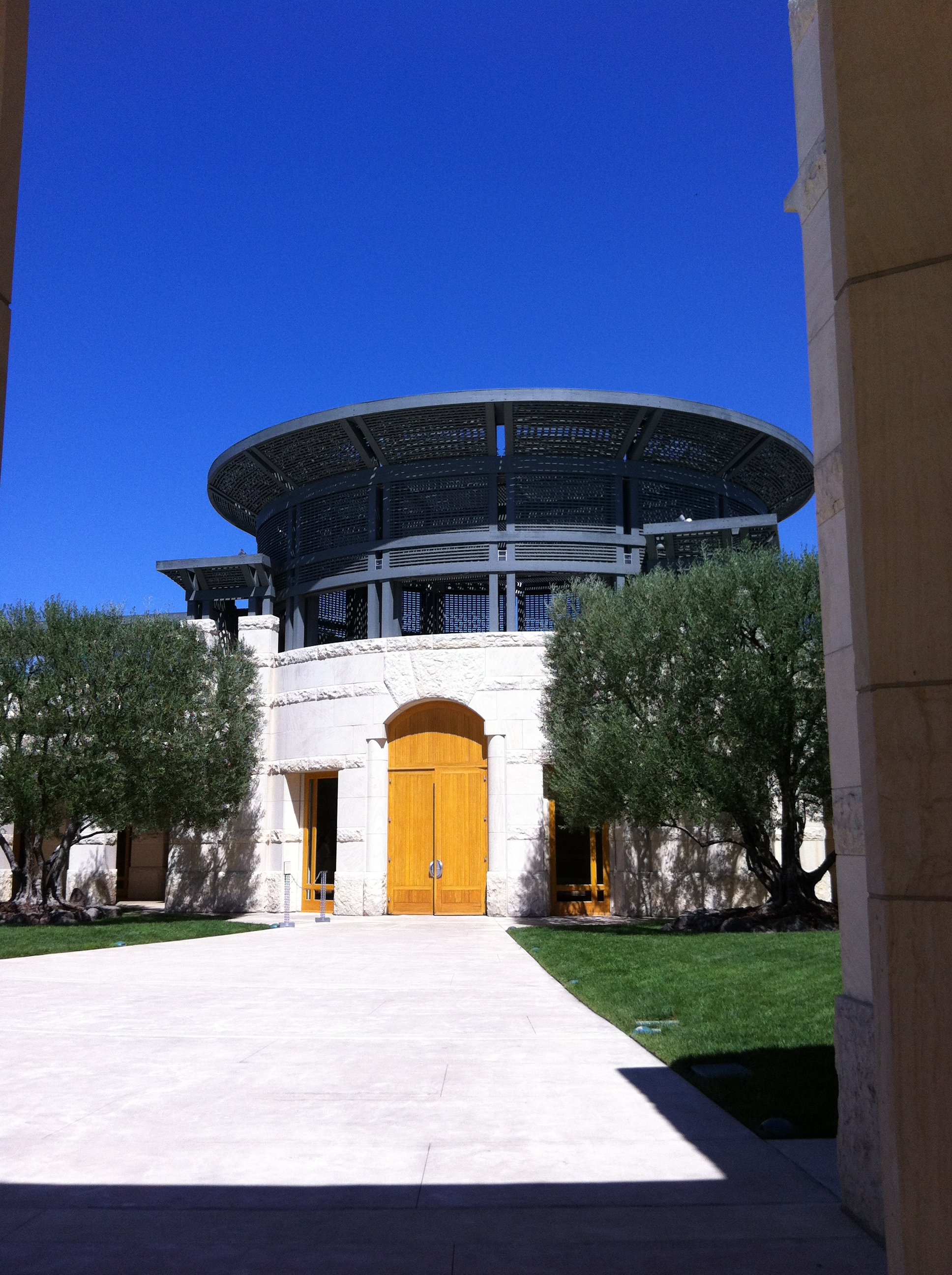
Opus One winery
Opus One was founded in 1979 and was the brain child of Baron Philippe de Rothschild and Robert Mondavi. These 2 visionary men set out to produce a super premium Bordeaux Blend based on Cabernet Sauvignon in Napa’s premium Oakville area.
Oakville is a small AVA located in the middle of the Napa Valley and stretches out over 5700 cares of which 5000 are planted. The soils are primarily made up of decomposed volcanic rocks from the eastern Vaca and western Mayacamas and silt, clay and gravel deposits left behind by the the Napa River. The weather is a little cooler, as Oakville is low enough to benefit of the cooling fog and winds which roll in from the pacific ocean and has full sun exposure from late morning till late evening. These conditions once again are ideal to grow Cabernet Sauvignon and other Bordeaux varieties.
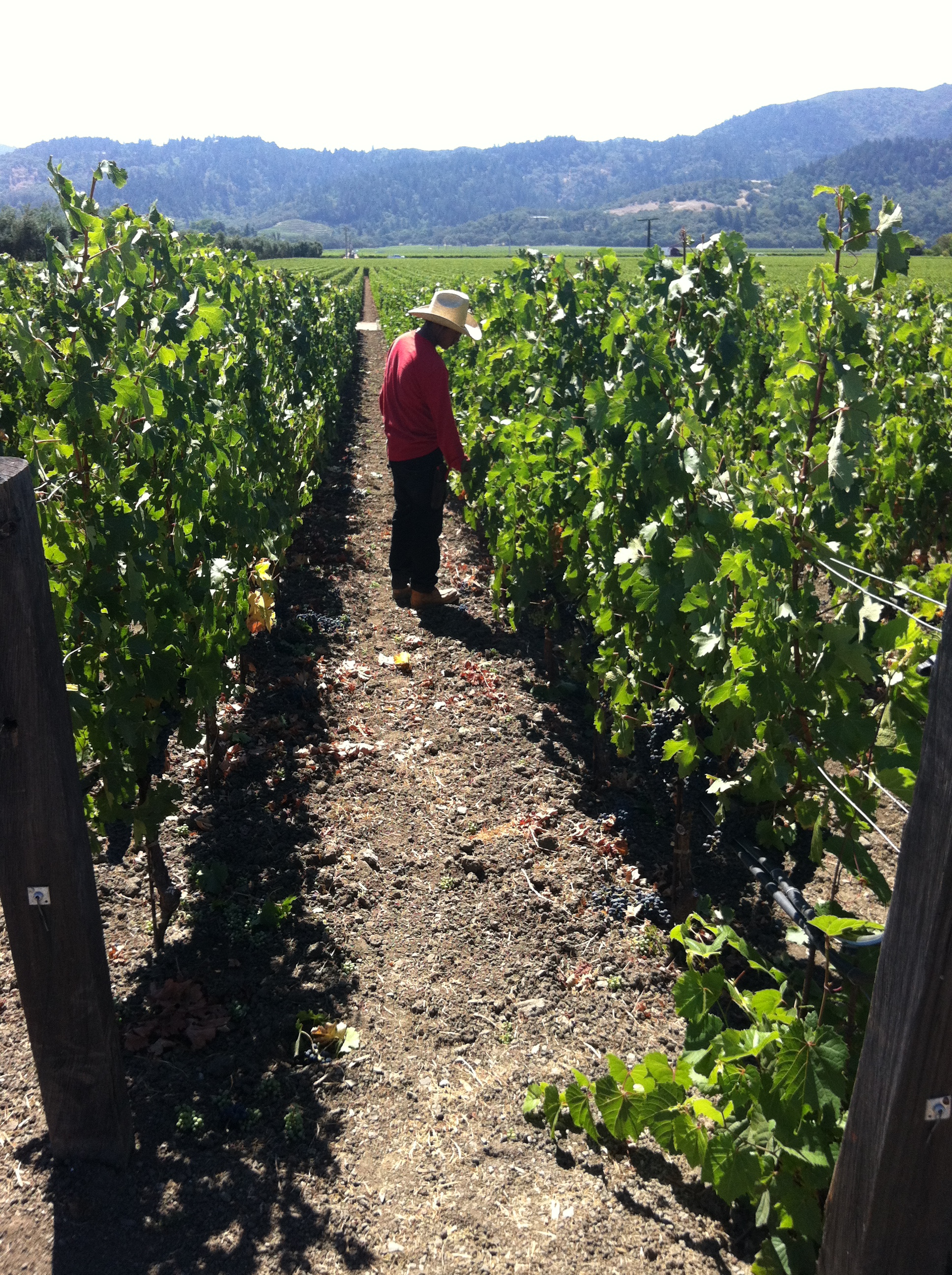
Vineyard worker tending to the vines at Opus One
The vineyard is planted with Bordelais varieties – 80% of the plantings are Cabernet Sauvignon, and the remaining 20 % is made up of Merlot, Cabernet Franc, Petit Verdot and Malbec.
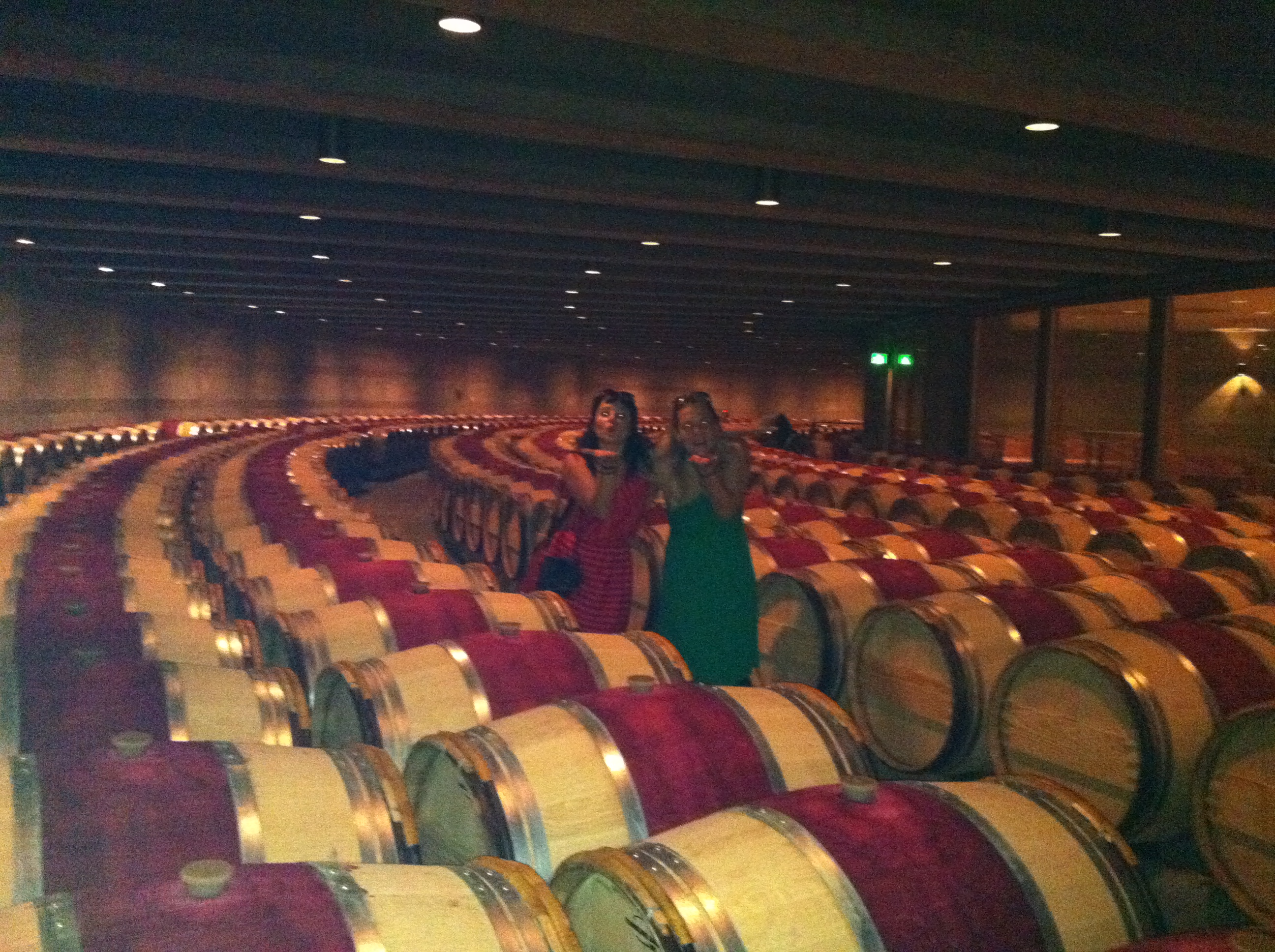
With love from Opus One!
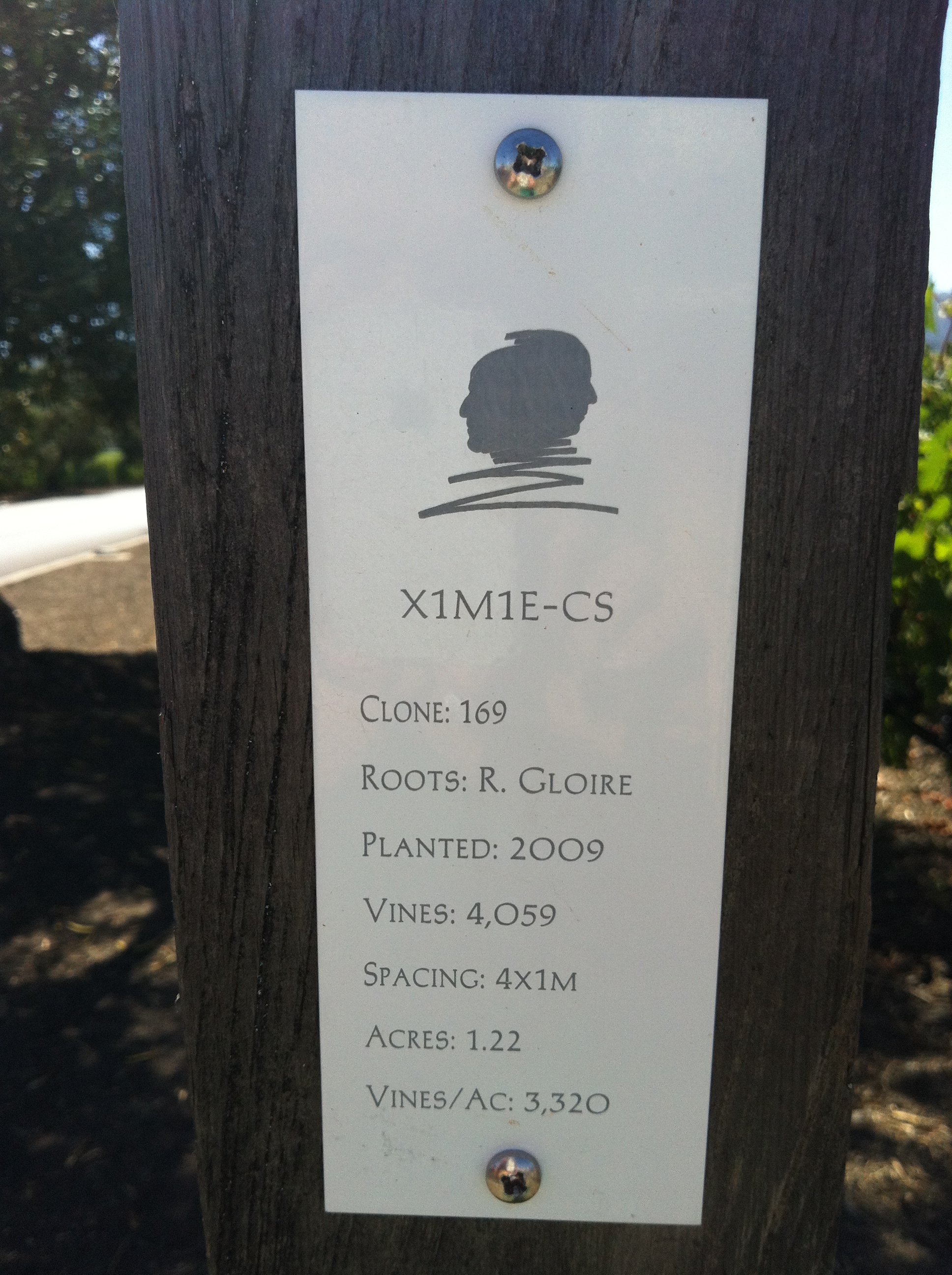
Vineyard markers at Opus One
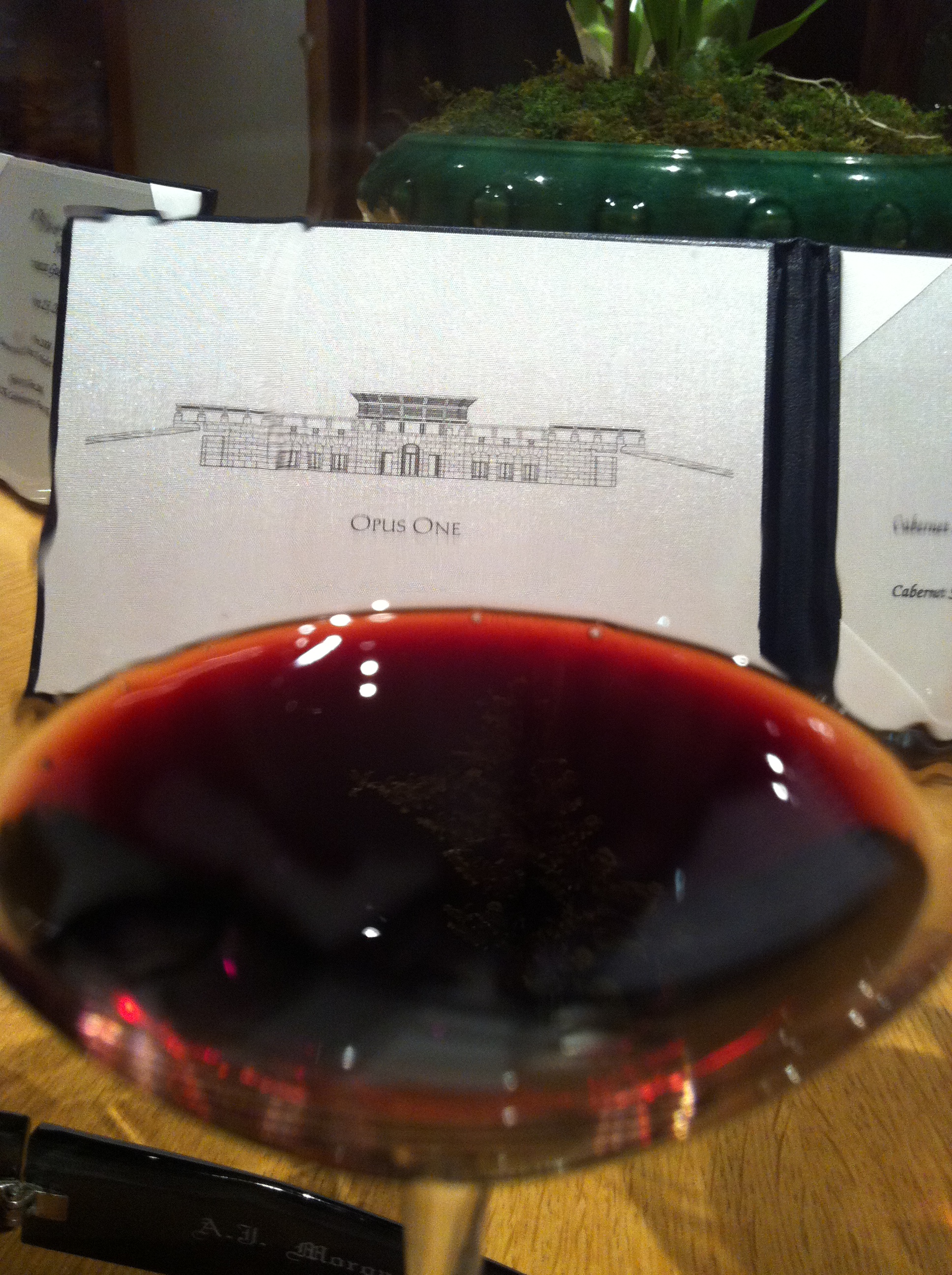
Opus One 2008
The 2008 vintage (86% Cabernet Sauvignon, 8% Petit Verdot, 4% Merlot and 1% Cabernet Franc and Malbec) was but a toddler, yet again I was impressed by the approachability of this wine – it was definitely enjoyable to taste and drink. It showed more herbaceous notes – coriander seed, aniseed and a little garique and eucalyptus – and the tannins were little more fine-grained and pronounced as was the acidity. Again it showed lots of promise for the future and it is definitely an iconic Napa Cabernet (blend).
This very small sample of Napa Cabs we tasted showed indeed 2 things. Firstly Napa Valley has definitely the potential to create excellent Cabernet Sauvignons, which are actually drinkable and enjoyable to drink upon their release, yet they definitely have the potential to age gracefully and seduce when they are a little more mature. Secondly, the wines we tasted were very different – each was the expression of their specific terroir – by this I mean the actual piece of dirt from which they came as well as the interpretation of the winemaker. As they say here in France, one needs a person with a vision to bring out all the potential of a great terroir!
